

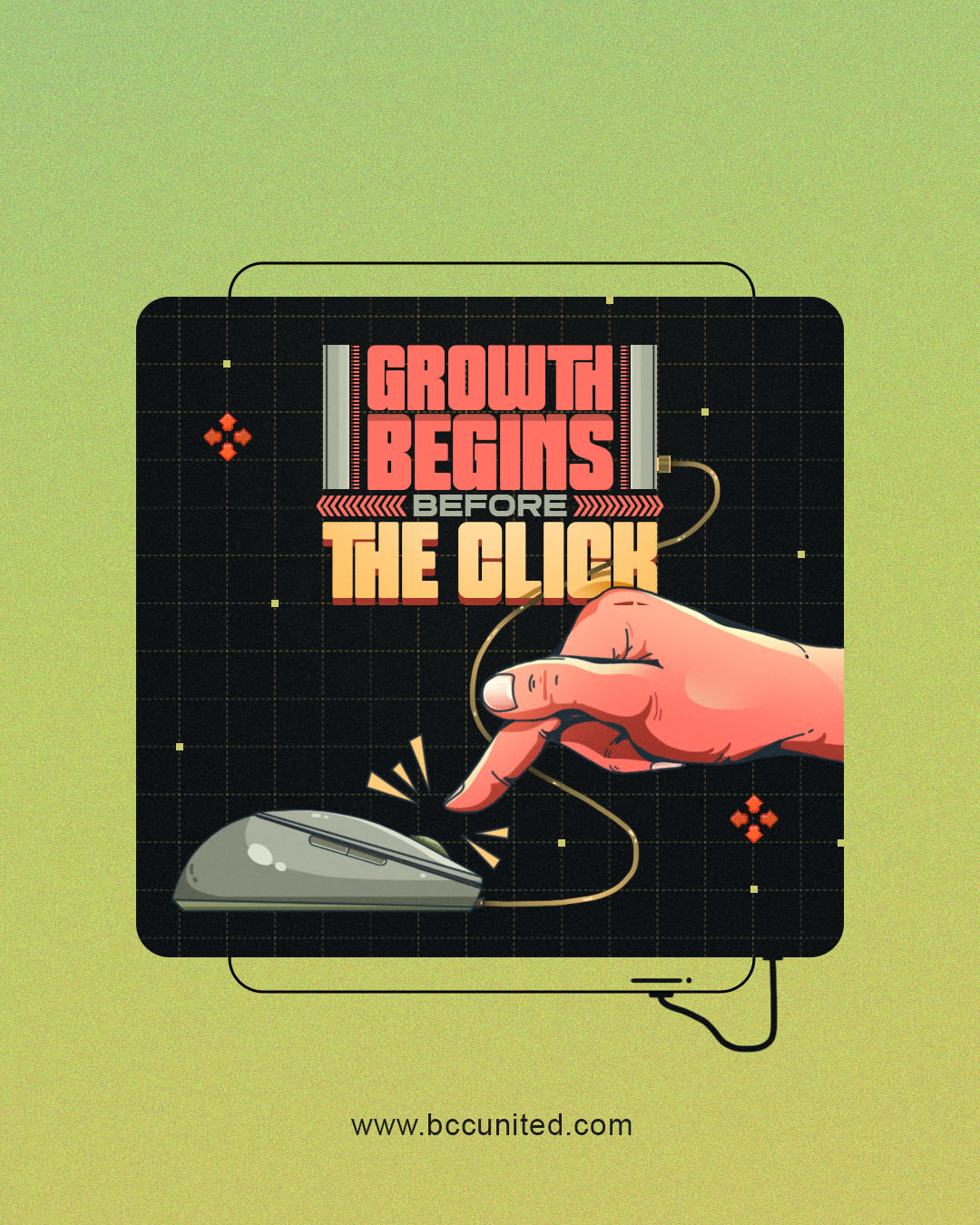
Every growth leader can recite their immediate conversion metrics—ROAS, CAC, and conversion rates. Yet across the enterprise landscape, an unexpected commercial paradox has emerged: the more efficiently organisations optimise performance marketing in isolation, the more expensive their next customer becomes.
Performance marketing captures demand; it does not create demand. It converts buyers who are already in-market, but it cannot generate the trust, familiarity, or preference that encourages customers to choose one brand over another.
When organisations rely exclusively on click-based acquisition, they gradually become dependent on rented attention rather than owned market influence. Over time, this weakens commercial resilience, increases acquisition costs, and limits sustainable growth.
True enterprise scaling cannot survive on transactional capture alone. Leadership must confront the core operational tension: why does a system engineered specifically for measurable growth become systematically less efficient over time?
The Diminishing Returns of Performance Only Growth
Performance marketing delivers measurable short-term results, making it one of the most attractive growth strategies for modern organisations. However, relying on it as the sole engine of growth creates structural limitations that become more visible as competition intensifies.
Most organisations compete through the same advertising platforms, bidding systems, and optimisation models. As more brands target similar audiences, acquisition costs naturally continue to rise. Without ongoing demand generation, organisations repeatedly compete for the same in-market buyers. This gradually increases CAC whilst reducing overall marketing efficiency. Growth becomes tied directly to advertising spend rather than customer preference. The moment investment slows, visibility and lead generation decline.
The fundamental problem is clear: performance marketing is highly effective at capturing existing demand, but demand must first exist. Understanding why costs rise explains only part of the challenge. Equally important is recognising why today’s measurement models no longer reveal the complete value created by marketing.
Why Attribution No Longer Tells the Full Story
Traditional attribution models were designed around measurable customer actions. Today’s buying journeys, however, are influenced by far more than the final click, making marketing value increasingly difficult to capture through conventional reporting.
Privacy regulations, evolving platform policies, and fragmented customer journeys have significantly reduced visibility across the path to purchase. Data tracking has become less complete, even as marketing complexity continues to grow. Because immediate ROI remains easier to demonstrate, organisations naturally prioritise activities that produce instant, measurable results. Long-term brand building, although highly influential, often receives less investment because its contribution is harder to quantify.
Customers rarely make purchasing decisions based on a single interaction. Trust, familiarity, and reputation are built through multiple experiences long before a conversion takes place. Not everything that creates business value can be measured through immediate conversion tracking.
Although performance marketing captures demand, attribution on its own does not provide the complete picture, meaning organisations need a more balanced approach to sustainable growth.
Brand Building Drives Sustainable Growth
Long-term growth requires organisations to stop viewing Performance Marketing and Brand Building as competing investments. Instead, they should operate together as complementary drivers of business performance.
Performance Marketing channels remain essential for converting active demand, but they are most effective when treated as the final stage of the customer journey rather than its starting point. Consistent investment in positioning, reputation, customer trust, and market visibility builds preference long before customers enter the buying journey. When Brand Building creates demand and Performance Marketing converts it, acquisition becomes more efficient, conversion rates improve, and customer acquisition costs become more sustainable.
The strongest growth strategies create demand before they capture it. Brand Building delivers benefits that extend far beyond marketing efficiency.
Brand Building as a Business Asset
Brand Building should no longer be viewed as a creative exercise or awareness campaign. It is a long-term business asset that strengthens commercial performance across the organisation.
Recognised brands become the preferred choice within their category, strengthening competitive differentiation. As customer recognition grows, organisations become less reliant on continually increasing advertising spend to generate visibility. Customers are more willing to choose, and remain loyal to, brands they already recognise and trust, reducing price sensitivity. Unlike paid media performance, brand equity compounds over time, creating a durable competitive advantage that continues to generate value long after campaigns end.
Realising this balance requires more than adjusting campaign budgets. It requires a marketing approach where long-term brand value and short-term performance marketing reinforce one another.
Why BCC-United?
Navigating this structural shift requires a comprehensive growth architecture rather than minor channel tuning. BCC-United helps enterprise leaders move decisively beyond viewing performance marketing as an isolated growth engine.
Our framework connects long-term brand building with performance execution to deliver a genuinely integrated growth strategy. Rather than optimising siloed campaigns in isolation, BCC-United helps organisations cultivate lasting brand equity that stimulates authentic demand generation, reduces platform dependence, and improves pricing power over time.
By aligning brand affinity directly with demand capture, we ensure your commercial scaling remains resilient as markets and buyer behaviours evolve. Ultimately, true enterprise growth begins before the click and the organisations that outperform in the years ahead will build enduring market influence, earn deep customer trust, and establish a market position that makes every future investment work harder.