

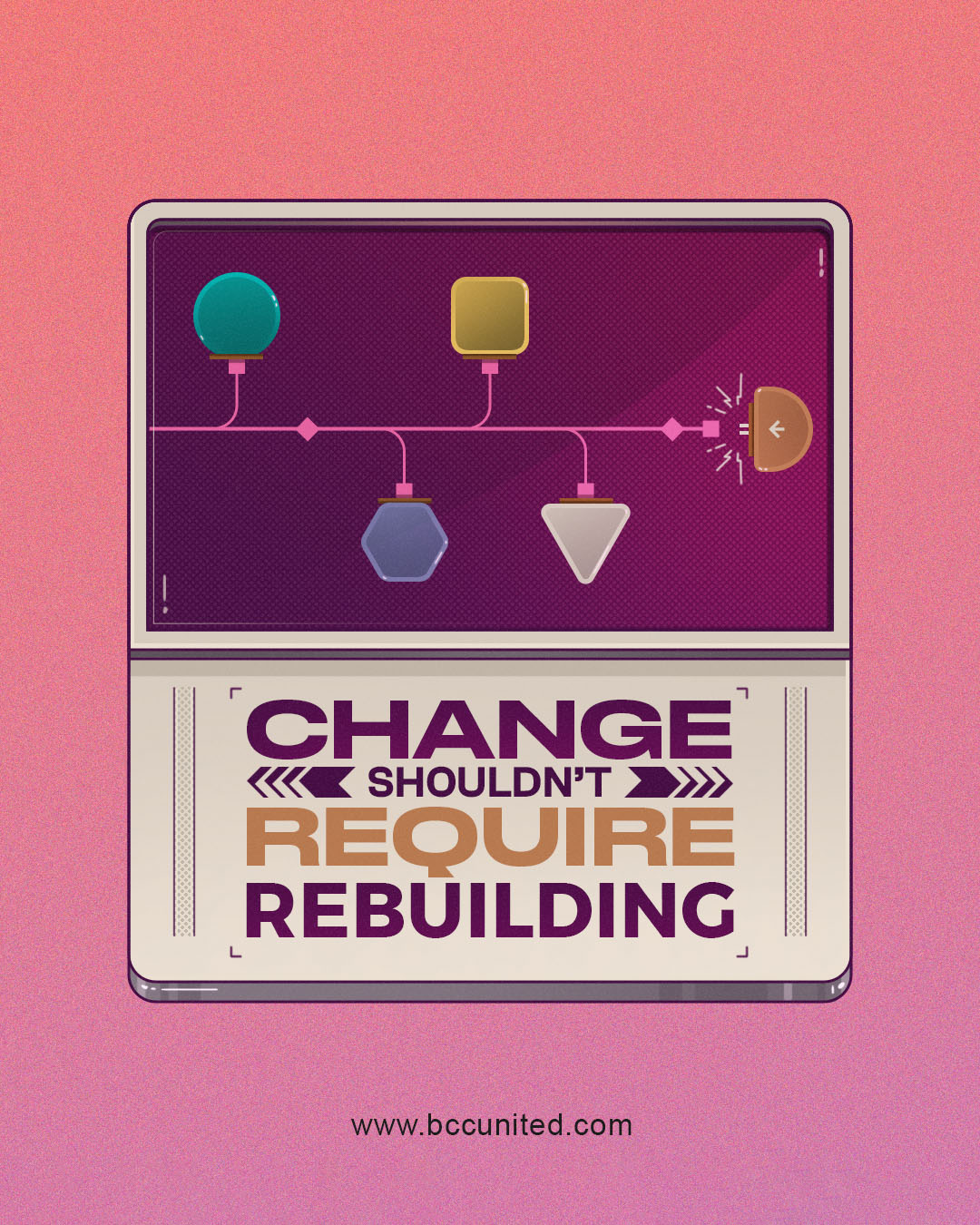
Enterprises today use more software than ever before, yet adding more technology does not necessarily make the organisation faster.
CRM, ERP, finance, HR, supply chain, customer service, and industry-specific platforms may each perform their individual functions effectively. The problem often emerges between them. When systems cannot exchange information or support processes seamlessly, employees compensate through manual work, data moves slowly between functions, and seemingly simple business changes become technology projects.
This makes integration more than an IT concern. The ability to connect systems increasingly determines how quickly an organisation can introduce new services, automate workflows, work with partners, adopt AI, and respond to changing business requirements.
Enterprise Integration is therefore moving beyond individual technology projects. It is becoming a reusable enterprise capability that allows organisations to change without repeatedly rebuilding the connections underneath the business.
The competitive question is no longer simply whether enterprise systems can communicate. It is how quickly the organisation can adapt because they do.
Moving Beyond Point-to-Point Integration
Enterprise integration was traditionally approached requirement by requirement. When two applications needed to exchange information, teams created a connection between them. When another requirement emerged, another connection followed.
This approach works when technology environments are relatively small. Across a modern enterprise, however, hundreds of applications, cloud platforms, legacy systems, partner environments, and data sources can create a growing web of dependencies.
A change to one system can then affect several others. Platform upgrades require integration rework. New applications take longer to introduce. Teams build duplicate interfaces for similar requirements. Employees continue reconciling information manually when connections fail to support complete business processes.
The resulting cost is not limited to IT maintenance. Fragmented integration can delay order-to-cash cycles, create inconsistent customer information, slow operational decisions, and make cross-functional change harder to execute.
Enterprise Integration must therefore evolve from repeatedly connecting individual applications to establishing a scalable foundation through which systems can interact consistently.
The objective is no longer simply to make software communicate. It is to reduce the effort required every time the business needs to change.
Building a Connected Enterprise
A Connected Enterprise is not created by placing every system on the same platform. It is created when different technologies can work together without their underlying differences becoming a barrier to business operations.
System Interoperability makes this possible by allowing information and business events to move reliably across cloud, hybrid, on-premises, legacy, and modern environments.
APIs play an important role in this architecture. Rather than being developed as disposable connections for individual projects, well-designed APIs can become reusable enterprise assets. Core capabilities such as customer information, inventory availability, pricing, payments, identity, or order status can then be securely accessed by multiple applications and workflows without rebuilding the same connection each time.
This changes the economics of technology change.
A new customer channel can reuse existing capabilities. A partner can connect to established services. A modern application can interact with a legacy platform without requiring the underlying system to be replaced immediately. Acquired businesses can be connected progressively rather than forcing immediate technology consolidation.
The same principle applies to data. When information moves consistently across systems, departments no longer need to operate from isolated versions of the business. Sales, finance, operations, and customer service can work with more consistent information while leadership gains a clearer view across functions.
Integration therefore stops being the work required after a technology decision. It becomes part of the architecture that makes future technology decisions easier to execute.
Enterprise Integration as a Business Capability
The strategic value of Enterprise Integration becomes clearer when the organisation needs to change.
Launching a new service may require customer, billing, fulfilment, support, and analytics systems to work together. Entering a new market can require additional payment providers, regulatory processes, logistics partners, or regional platforms. An acquisition may introduce an entirely different technology environment. An AI initiative may require information from several systems before it can produce meaningful outcomes.
In a fragmented environment, each change creates another integration project.
In a connected enterprise, much of the underlying capability already exists.
Change shouldn’t require rebuilding. When integration is designed as a reusable enterprise capability, new business requirements can build on established connections, services, and workflows rather than starting again each time.
This creates several business advantages.
- Faster Business Change: New applications, services, channels, and partners can connect through established integration patterns rather than requiring extensive custom engineering for every initiative.
- Connected Workflows: Processes can move across departmental and system boundaries with less manual intervention, enabling activities such as order management, billing, fulfilment, and customer service to operate as end-to-end workflows rather than isolated tasks.
- Greater Technology Flexibility: Organisations can modernise progressively. Individual systems can be replaced or upgraded without forcing simultaneous transformation across the entire technology estate.
- Stronger AI Readiness: AI depends on access to relevant business context. When enterprise information remains trapped across disconnected systems, intelligent applications operate with an incomplete view. Integration allows AI and automation to work across broader operational context rather than within isolated applications.
This is where integration becomes a competitive advantage. It reduces the technology friction associated with business change.
The organisation does not become more competitive simply because its systems are connected. It becomes more competitive because connectivity allows it to respond, build, integrate, and scale faster when opportunities emerge.
Governing the Connected Enterprise
Greater connectivity also creates greater responsibility.
As information moves across more applications, cloud environments, business units, and external partners, organisations need clear controls governing how those connections are created, accessed, monitored, and maintained.
API governance establishes consistent standards for authentication, access, versioning, performance, and lifecycle management. Identity and access controls determine which systems and users can interact with specific services and data. Monitoring and observability provide visibility into how information moves across the enterprise and where failures or unusual activity occur.
These controls become particularly important as integration expands beyond internal systems. Partner ecosystems, customer platforms, third-party services, and AI applications can all depend on enterprise APIs and data flows.
Without consistent governance, greater connectivity can introduce security gaps, duplicated interfaces, uncontrolled dependencies, and new operational risks.
A mature integration strategy therefore balances interoperability with control. Systems should be easier to connect, but those connections must remain secure, observable, maintainable, and aligned with enterprise standards.
The goal is not unrestricted connectivity. It is a connected enterprise that can evolve without losing control of the architecture supporting it.
Why BCC-United?
Moving from individual integration projects to an enterprise integration capability requires more than connecting applications. It requires an architecture that allows technology environments to evolve while preserving interoperability, security, and operational continuity.
BCC-United helps organisations design and implement Enterprise Integration strategies across complex cloud, hybrid, modern, and legacy environments. We establish scalable integration architectures that allow systems, data, and business processes to work together without creating unnecessary dependencies between platforms.
Through API architecture and lifecycle management, we help organisations turn frequently required business capabilities into secure, reusable services rather than rebuilding connections for every new requirement. We also connect cross-functional workflows so information can move consistently between applications while reducing manual intervention and operational friction.
The result is an enterprise better prepared for continuous change. New applications can be introduced more easily, existing platforms can be modernised progressively, automation can operate across functions, and AI initiatives can access broader business context.
The competitive advantage does not come from owning more technology. It comes from having an enterprise architecture that allows technology to work together as the business evolves.
In an increasingly connected economy, Enterprise Integration is no longer simply the work required to make systems communicate. It is the capability that determines how readily the enterprise can change.