

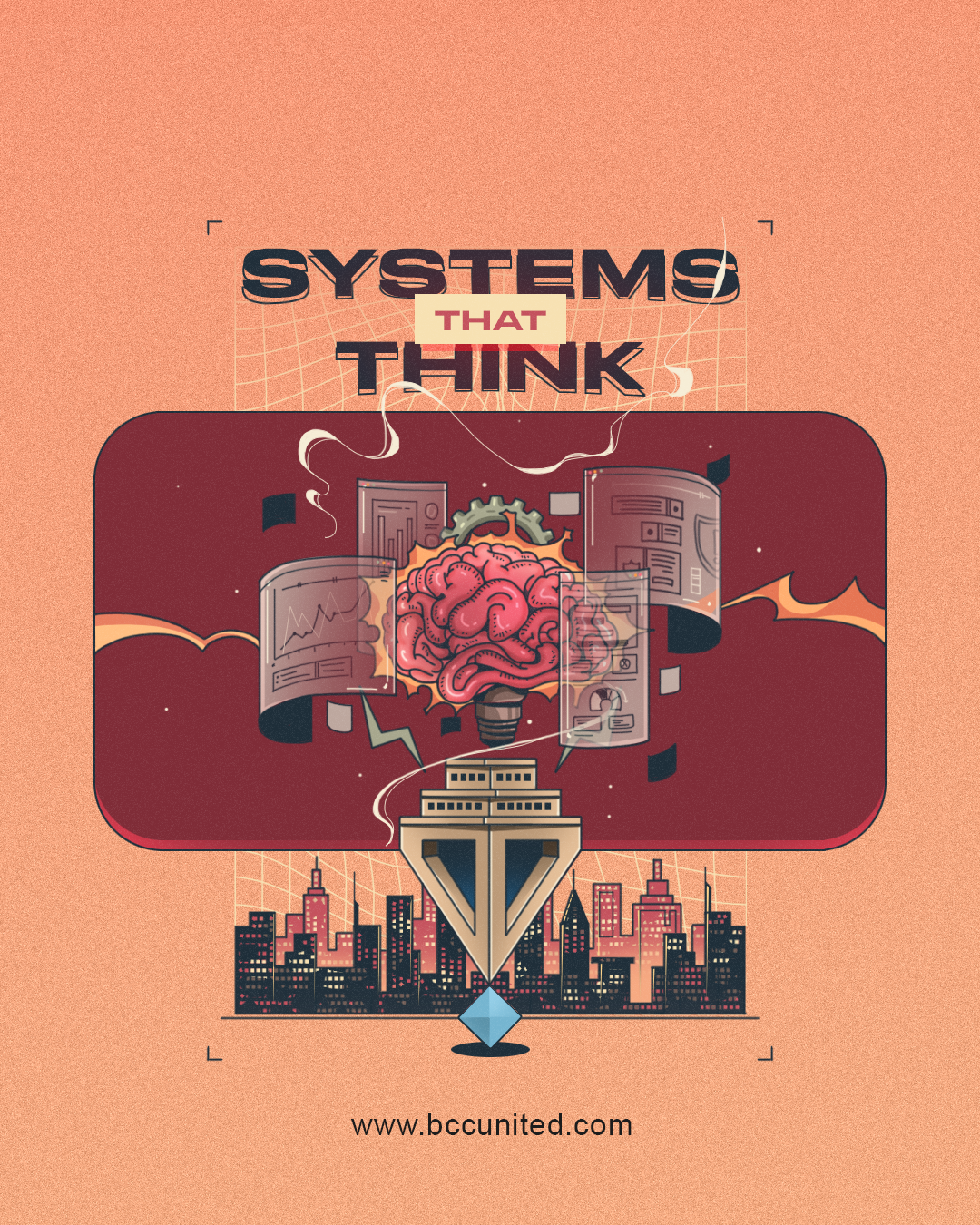
Enterprise software in 2026 faces a rigorous new standard; efficient workflow execution alone is insufficient. Modern organisations must navigate escalating complexity, rising costs, and accelerated decision cycles. As these pressures mount, software is judged by more than technical stability. It is measured by how effectively it supports the overarching business mission.
This shift demands frameworks that operate as connected intelligent systems rather than isolated applications. This re-architecture begins by embedding logic at the core rather than layering it on as an afterthought.
By rethinking these foundations, companies move toward a model of continuous, proactive evolution that allows systems to anticipate market shifts. This relies entirely on building a new, AI-native software DNA. By prioritising these architectures, leaders ensure their technology remains a strategic asset for long-term innovation.
The Rise of AI-Native Software
Earlier generations of enterprise platforms often treated AI as a simple add-on. Models were introduced to automate specific tasks after systems were already built. In 2026, sustainable success depends on moving beyond reactive approaches. True intelligent systems are built with AI-native design from the very beginning.
By placing cognitive capabilities at their absolute centre, AI-native systems weave learning loops and decision engines directly into every daily workflow. This allows software to improve continuously instead of waiting for manual updates. Crucially, these platforms are designed with control and oversight, not just raw intelligence. They embed logic at the core while remaining observable and governed for reliability. This ensures enterprise readiness while moving from reactive operations to predictive outcomes. Systems now anticipate needs and surface insights early to support smarter functions. Such cognitive intelligence requires an elastic environment capable of processing massive scale.
Cloud-First Architecture as the Enabler
intelligent systems require environments capable of rapid scaling and extensive data processing. Cloud-first architecture provides this capability, but its role in 2026 has expanded—shaping how systems are designed, operated, and evolved, not merely where they are hosted. This model serves as the primary engine for continuous delivery, allowing organisations to sustain the high-velocity cycles that AI-native software demands.
By adopting the cloud as a total operating model, enterprises move beyond static infrastructure to an elastic delivery environment. This shift ensures that the underlying system can expand or contract based on real-time processing needs without manual intervention. The cloud enables zero-downtime deployments and seamless scaling across global operations. It provides the necessary infrastructure backbone for launching new capabilities to market faster than ever before. Consequently, the cloud becomes the foundation for continuous system evolution, delivering the operational stability required for sustained growth.
Modular Systems and Composable Design
Monolithic software frameworks often fail to survive in markets defined by rapid, unpredictable change. Intelligent systems demand a more fluid approach known as composable design. By breaking down large applications into independent, modular components, enterprises can refine specific features without risking total system failure. This architectural choice allows business logic and AI engines to evolve at different speeds while staying perfectly aligned.
As a result, engineering teams operate with far greater agility. Developers can focus on perfecting individual modules, ensuring that updates to one feature do not destabilise the broader ecosystem. This composable approach reduces technical debt and allows for the surgical replacement of outdated components. By decoupling these elements, organisations can respond swiftly to market shifts and customer demands. Such technical agility transforms software from a rigid liability into a versatile, high-performance asset that adapts without requiring complete system reconstructions.
How Enterprises Are Re-architecting in 2026
Software modernisation is evolving from a temporary IT project with a fixed end date into a permanent, leadership-driven capability. Even before 2026—and increasingly as an ongoing practice—successful organisations have treated re-architecture as central to their operations. High-level executives recognise the transition to intelligent systems as a key driver of competitive advantage. Consequently, technical decisions are guided by long-term corporate vision and strategic business objectives, rather than confined to IT operations alone.
Legacy environments undergo a phased transformation using contemporary tools like service layers and containerisation. Meanwhile, every new system arrives with intelligence and adaptability as foundational requirements. This disciplined approach ensures that intelligent systems never compromise day-to-day operational stability.
Leaders move away from reactive, short-term fixes in favour of building durable digital assets. By shifting ownership to the boardroom, companies ensure technology remains a strategic force. Every architectural investment is now measured by its ability to deliver tangible and lasting business value. This cultural realignment guarantees that the enterprise remains resilient in an era of constant disruption.
Why Choose BCC-United?
At BCC-United, we guide enterprises in transitioning from application-focused approaches to designing truly intelligent systems. We operate on a philosophy that views architecture as a continuous leadership capability, not a one-time transformation. Our strength lies in building systems that think, act, and scale with business priorities.
We treat software as a responsive organism, ensuring every architectural decision balances clarity with future readiness. Our approach applies AI where it creates genuine value, emphasises modularity where it unlocks agility, and maintains simplicity where it serves the mission best.
In 2026, leading enterprises will re-architect software to think and adapt with purpose—and BCC-United delivers architecture driven by intent, guided by judgement, and built for lasting impact.