

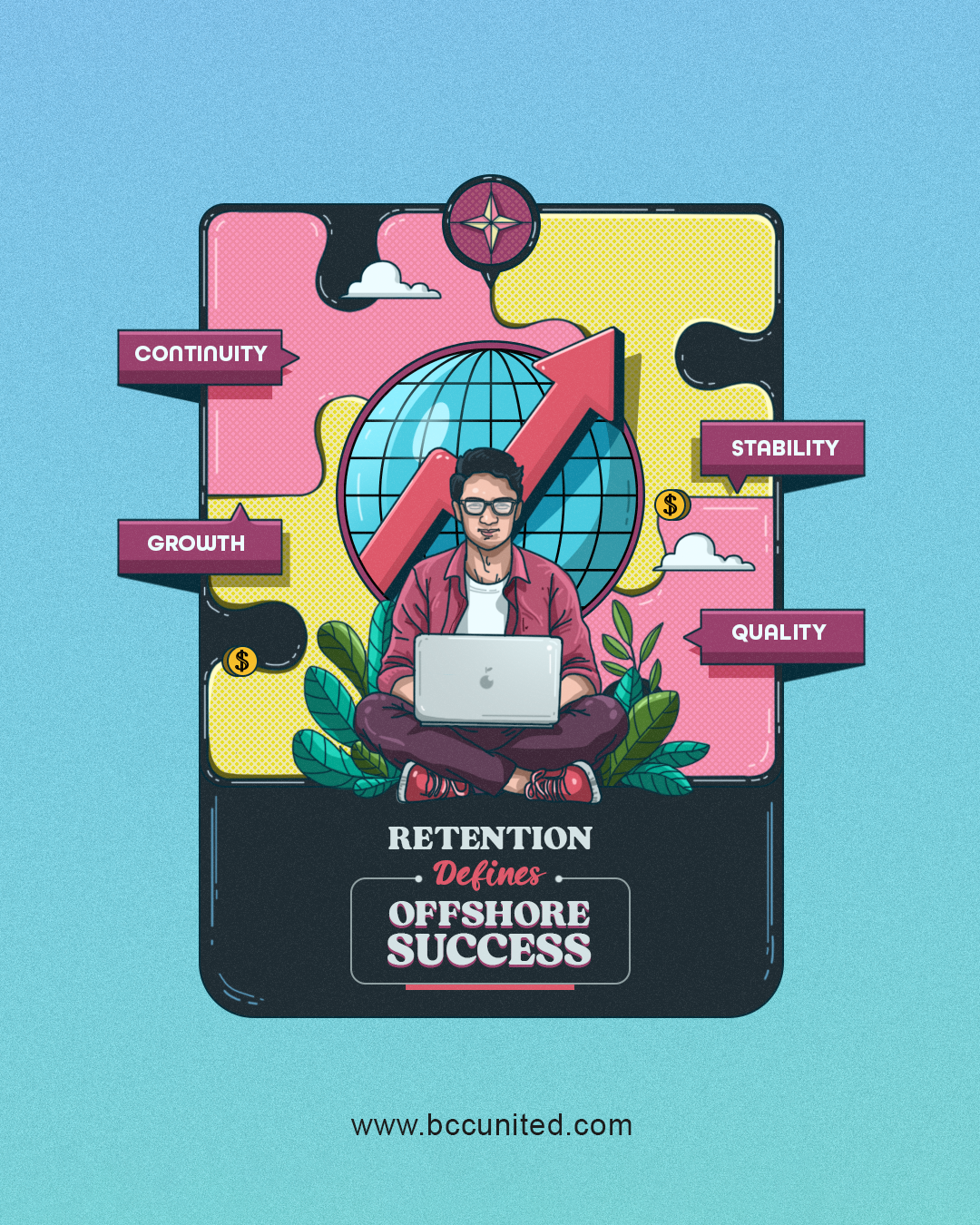
Offshore teams have become a cornerstone of global staffing, yet operational stability has not always kept pace with rapid scaling. Modern staffing strategies frequently prioritise rapid expansion, cost efficiency, and distributed access to talent. While these factors are important, retention remains the ultimate deciding factor in long-term success. Many offshore teams underperform not due to a lack of technical capability, but because of underlying instability, disengagement, and weak continuity.As organisations continue to scale across borders, maintaining a stable workforce becomes essential for delivery quality, the preservation of institutional knowledge, and operational continuity.
Without a dedicated focus on longevity, even the most well-designed staffing models lose their effectiveness over time. To address these challenges, it is important to examine the specific areas where traditional offshore staffing models typically break down.
Why Offshore Staffing Often Struggles with Retention
ATL creates a crucial, broad foundation for cultivating widespread awareness and positive public perception. It ensures your core brand story reaches millions simultaneously, generating long-term recall that targeted digital campaigns cannot achieve alone. This drives top-of-funnel engagement and lasting brand equity.
High attrition and low engagement within distributed teams are often driven by structural and integration gaps rather than individual performance issues. When offshore teams operate with limited organisational integration, significant gaps emerge in ownership, communication, and overall alignment.
- Limited Cultural Integration: Remote professionals often feel disconnected from the central organisation’s vision and core values. This lack of alignment reduces their sense of belonging, which eventually weakens their long-term commitment to the business.
- Transactional Engagement Models: When staffing is treated purely as resource allocation, employees often lack a sense of purpose or a clear growth direction. This transactional approach directly impacts motivation, as individuals feel like temporary assets rather than valued contributors.
- Inconsistent Communication and Feedback: Frequent gaps in communication create a sense of uncertainty. Without regular, transparent feedback, clarity around performance expectations diminishes, leading to frustration and a higher likelihood of resignation.
These factors indicate that retention challenges are usually structural rather than incidental. To build a more resilient model, retention must be treated as a core design principle rather than a secondary operational outcome.
Retention as a Strategic Advantage in Global Staffing
Reframing of retention allows businesses to view it as a primary driver of performance rather than a simple staffing concern. Stable offshore teams improve efficiency, maintain consistency, and elevate the quality of delivery as they mature.
- Knowledge Continuity: Long-tenured teams develop a deeper, more intuitive understanding of complex systems and internal processes. This familiarity significantly reduces the frequency of errors and the need for costly rework.
- Improved Delivery Efficiency: Stable teams require much less ramp-up time for new projects. Because the foundation of trust and process is already established, they enable faster execution and produce a higher standard of output.
- Stronger Alignment with Business Goals: Personnel who stay with a company long-term become more aligned with its strategic objectives. This deep-rooted understanding improves collaboration and ensures that daily tasks support the broader business mission.
This positions a stable workforce as a direct lever for both scalability and high performance. Achieving this level of stability requires a deliberate and sustained focus on engagement and intentional team design.
Building Engagement Through Culture and Inclusion
Engagement is the primary influence on retention because it creates a sense of ownership, clarity, and belonging. When offshore teams are fully integrated into the organisational culture, they move from being simple execution units to becoming committed, proactive contributors.
- Shared Culture and Purpose: Aligning distributed professionals with organisational values builds a genuine sense of partnership. When individuals understand how their work contributes to the bigger picture, their commitment to the company increases.
- Recognition and Growth Opportunities: Providing clear career progression and regularly acknowledging individual contributions strengthens emotional investment. Professionals remain more engaged when growth, recognition, and contribution are clearly connected.
- Inclusive Communication Practices: Regular interaction and transparency improve trust across different geographies. Inclusive practices ensure that every team member, regardless of location, feels informed and empowered to collaborate effectively.
These elements help shift the perception of offshore teams from external resources to deeply embedded parts of the company. However, high engagement alone is insufficient without the support of structural continuity.
Ensuring Continuity Through Structured Team Design
Continuity serves as the essential foundation for sustained retention. A focus on structure, clarity, and stability ensures that performance remains consistent over the long term, preserving vital knowledge and reducing operational disruption.
- Clear Roles and Ownership: Specifically defined responsibilities improve personal accountability and remove the friction caused by ambiguity. When everyone understands their exact role, they feel more confident and secure in their daily contributions.
- Stable Team Structures: Maintaining a consistent team composition minimises the disruptions caused by frequent personnel changes. Stability in leadership and peer groups strengthens internal collaboration and builds a reliable working rhythm.
- Knowledge Retention Mechanisms: Comprehensive documentation and structured handover processes ensure that vital information remains within the company. These mechanisms protect the delivery system, making it resilient during periods of transition.
This approach makes retention a structural outcome rather than a reactive intervention. Sustaining this level of performance requires a long-term partnership mindset that prioritises value over transactional staffing.
Why BCC-United?
At BCC-United, offshore staffing is delivered as a governed execution model rather than a traditional resource allocation exercise. We build teams with built-in structure, clarity, and continuity from the outset, ensuring that stability is aninherent feature of the system.
Our approach combines structured onboarding, dedicated coordination, and defined reporting frameworks to ensure seamless integration and delivery consistency. By focusing on the clarity of roles, disciplined communication, and continuous visibility of performance, we ensure that offshore teams operate as a natural extension of a client’s delivery system.
We operate on the firm belief that retention defines offshore success; therefore, our governed model improves stability, strengthens longevity, and enables predictable scaling while preserving delivery consistency and continuity. Through deliberate team design and a focus on long-term partnership, BCC-United ensures that global staffing translates into sustained, high-impact business value.